
Leadership
Technical expertise is no longer enough in professional services
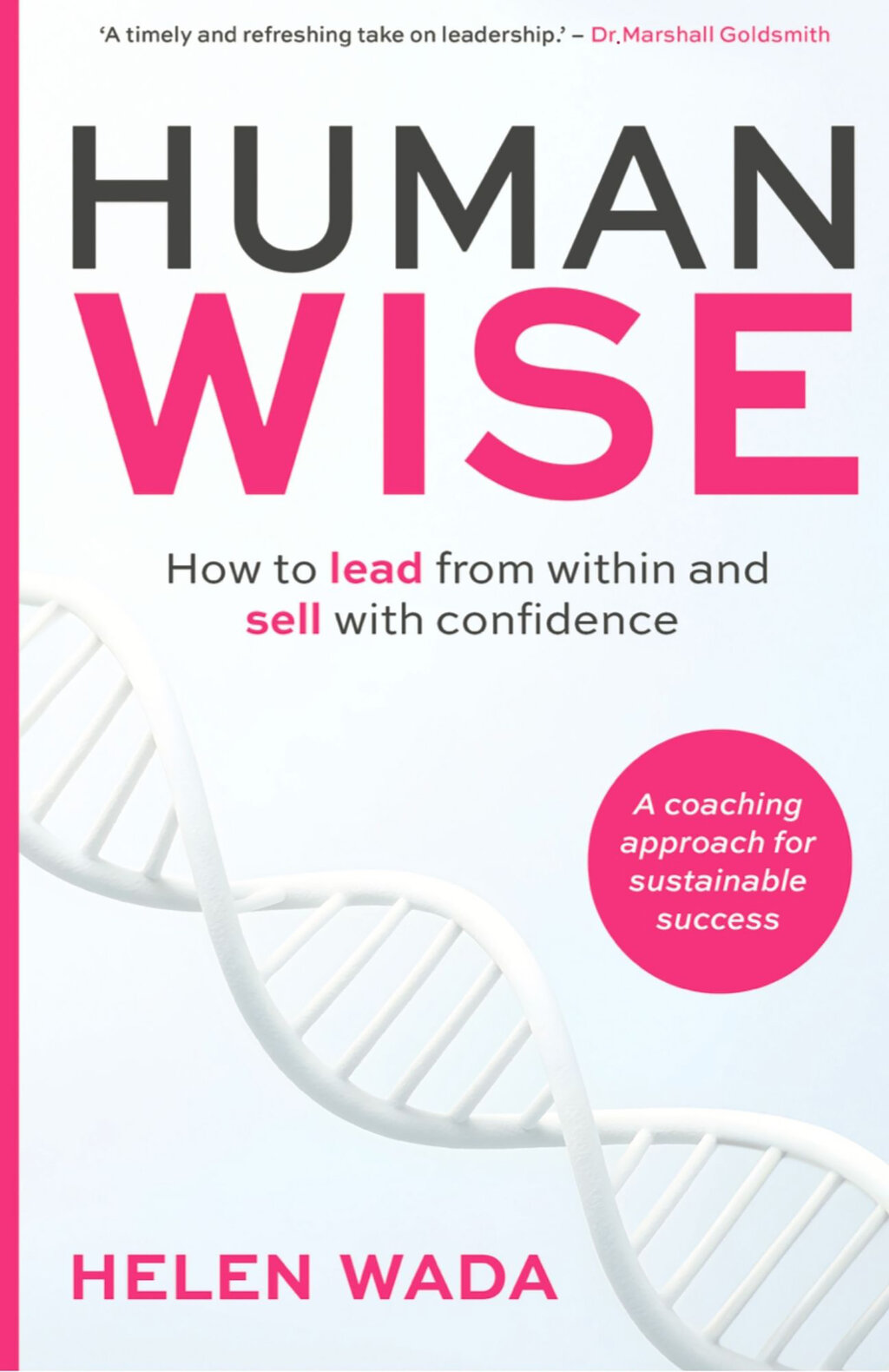
Helen Wada author of HUMAN-WISE: How to lead from within and sell with confidence discusses why a coaching approach may be the answer experts are looking for.

Professional services firms are not short of expertise. They are full of highly capable, brilliant minds who have spent their careers delivering excellence. But there comes a point where technical capability alone is no longer enough to serve clients and grow the business.
Dan French,
founder and CEO, Consider Solutions
The future that is unfolding isn't one where finance and accounting professionals are replaced – but one where their responsibilities will change. Success in this transition depends on making clear assessments of where AI will add value, establishing clear policies and governance in use, and the cultivation of skills that complement technical capabilities.
ACCA expects that coming years will see organisations develop more integrated workflows based on the principle that AI adoption is not just about distinguishing high versus low-value activities – but focusing on outcomes, quality and value.
Only a minority of finance and accounting teams have implemented AI solutions – but these resources are widely available, and organisations are reviewing opportunities and workforce needs.
AI adoption is expected to accelerate in coming years, especially as our data shows investment on AI initiatives is increasing, and widespread cloud adoption provides a crucial foundation for AI implementation.
The profession is still in the invention and adoption stage of AI, as demonstrated by investment data and current adoption/usage statistics. And the profession is embracing the learning and employment challenge offered by AI as shown by the recently announced changes to the ACCA Qualification which embraces emerging advances in technology and sustainability.
The report adds that widescale use of a general-purpose technology, like AI, may take longer than anticipated.
Lord Phillip Hammond at an event
The professional services industry is shifting
Many are finding that in today’s climate, winning work, building relationships and sustaining client trust feels harder than it used to. Clients are more informed, problems are more complex, and decisions take longer.
The environment has shifted, but the way many professionals show up and build business opportunities has not.
At the same time, there is pressure on leaders like never before. They are expected to embrace new technologies and ways of working, develop their teams in a hybrid environment, and create cultures where people feel engaged and committed.
They are also being asked to spend more time in the market with clients, opening doors to new opportunities, while leading with courage, clarity and compassion.
And yet, many professional experts are not taught how to build business or navigate commercial conversations until it is almost too late in their career. They find themselves stepping into partnership or senior leadership roles and being told that progression now depends on their ability to grow a client base and build a business case.
The challenge with moving from delivery to developing business
The trouble is that when individuals start to pivot from delivery into developing new business, a gap quickly emerges. A gap in skills, in confidence, and ultimately in execution.
Previous success, built on technical excellence and delivery, no longer guarantees future success in a more complex and client-led environment.
In the worst cases, individuals decide to leave, often at exactly the point where they have the knowledge and experience to make the greatest difference to their clients.
Others stay, but find that what has made them successful to date no longer holds in a more complex, client-led environment.
So, what needs to change to support professional experts in bridging this gap? How do they build the confidence to lead, engage clients, and create the kind of trusted relationships that underpin sustainable success?
Bridging the skills gap with a coaching lens
The shift lies in looking more closely at the skills and practice of coaching, not as an alternative to technical expertise, but as the bridge between capability and the confidence to lead and sell in today’s complex commercial world. Why does this matter, and what has coaching got to do with commercial conversations and leadership?
Let’s start with leadership. Professional experts are used to being the person with the answer, the one who adds value through knowledge and direction.
As they step into leadership roles, the expectation shifts. It is no longer about having all the answers, but about creating the conditions for others to perform, to think, and to grow.
Leader as coach
This is where a coaching approach becomes critical. Not as a separate activity, but as a way of leading day to day. Asking questions rather than giving instructions, listening to understand rather than respond, and creating space for others to find their own solutions.
The idea of the ‘leader as coach’ is now widely understood, with many stepping into leadership roles expected to develop their coaching skills to build the capability of others. Coaching skills therefore become an essential part of how experts develop as they move through their professional careers.
When this becomes part of how leaders show up, the impact extends beyond individual performance. Teams build confidence more quickly, feel more supported in their development, and are better equipped to navigate the complexity of their roles. This in turn strengthens retention, as people are more likely to stay in environments where they are able to grow and succeed.
What is less well explored, however, is how these same coaching skills apply in commercial conversations with clients.
Coaching skills for commercial conversations
Building trusted client relationships requires a balance of credibility, reliability and intimacy. Most professional experts are comfortable with the first two. The harder question is how to create that sense of intimacy, and the kind of relationship where you truly add value through curiosity, challenge and advice.
An experienced professional coach creates the conditions for trust, where individuals feel comfortable sharing what is really on their mind, not just what they think they should say.
The same principle applies in client conversations. When professionals create that space, they move beyond surface-level discussions and begin to understand the real challenges, priorities and pressures their clients are facing.
This is where coaching skills make a tangible difference. Rather than jumping quickly to solutions or leading with expertise, the focus shifts to asking thoughtful questions and getting genuinely curious about the client’s situation. Listening with intent and taking time to explore before responding allows for a deeper level of insight and connection.
The benefit of this approach is that, rather than relying solely on technical expertise, the focus shifts to creating strategic insight through better conversations. For many professional experts, stepping beyond the comfort zone of being the technical expert to becoming a broader commercial leader is a key pivot point.
It is through this approach that intimacy develops, trust is built, and the opportunity to add real value begins.
A coaching approach for sustainable success
But the power of coaching skills does not stop there. Much of what holds professional experts back from selling with confidence sits in their own limiting beliefs.
“I don’t like selling,” “it’s just not me,” “my clients are too busy to want to hear from me.”
Left unchallenged, these beliefs shape how individuals show up, often holding them back from building relationships and creating opportunities in a way that feels authentic to them.
A coaching approach to developing yourself includes reframing these limiting beliefs and building an approach that moves you forward, one conversation at a time.
Reflection is a skill that professional coaches develop as part of their core practice, yet it is equally essential for professional experts as they develop themselves and their business. The closer you are to the top of an organisation, the more important this skill becomes. It creates the space to step back, think clearly, and make more deliberate choices in how you lead, engage clients, and grow your business.
Managing pressure and dealing with uncertainty
Alongside this, professional experts are operating under increasing levels of pressure and uncertainty. Client expectations are higher, timelines are tighter, and the path to a solution is often less clear. In these moments, the instinct can be to move quickly to answers or to rely more heavily on expertise.
A coaching approach creates the space to pause, to think more clearly, and to navigate uncertainty with greater confidence. It supports individuals to stay present in the conversation, ask better questions, and make more considered decisions in complex situations.
One conversation at a time
So, in answer to the question posed at the outset, the skills and practice of coaching not only enable professional experts to become more effective leaders, but also strengthen their ability to build trusted commercial relationships. A place where insight and advice are shaped through the confidence to connect, and where honest and open conversations drive clearer thinking.
One skill, with multiple benefits. Developing themselves, leading their teams, and growing their business, one conversation at a time.
Main image: Helen Wada, founder The Human Advantage® and author. Main video supplied by kontekbrothers/Creatas Video via Getty Images