Rankings report: KSA
KSA feels the strain of rapid change
The Kingdom of Saudi Arabia’s ambitious Vision 2030 programme to modernise the economy is bearing fruit. But not all statistics bear scrutiny and the rapid rate of change is leaving some firms running to catch up. Che Golden reports.
Akey part of the Kingdom of Saudi Arabia’s plans to modernise its economy was opening up the country to foreign owned businesses and encourage them to establish regional headquarters in the region. By early 2026, more than 600 multinational companies had established RHQs (Regional Headquarters) in Riyadh, exceeding the government’s original 2030 target of 500. Participants include technology firms, professional services organisations, and financial institutions.
But while this figure may look good on paper, a closer look at the nature of these companies shows that all is not what it seems.
Maher Zureikat,
CEO of Bassam Andijani Chartered Accountants and Consultants, a member firm of Russell Bedford
“We still need to be cautious with these statistics,” said Maher Zureikat, CEO of Bassam Andijani Chartered Accountants and Consultants, a member firm of Russell Bedford. “We should make a distinction between companies that have obtained an RHQ license and those that have established substantive operational presences. A proportion of RHQ entities have been set up primarily to satisfy the January 2024 government procurement mandate, which requires an RHQ in Saudi Arabia to be eligible for public contracts, rather than to relocate genuine decision-making functions to the Kingdom.”
Some RHQ entities maintain minimal physical presence, limited local headcount, and retain their effective management offshore. The regulatory framework continues to evolve on this point, and MISA (ministry of Investment of Saudi Arabia) has introduced updated compliance requirements around executive presence and staffing thresholds. Whether these are consistently enforced remains to be seen.
“For accounting and advisory firms, the RHQ programme's impact remains to be fully seen,” said Zureikat. “Newly arriving multinational groups require assistance with commercial registration, ZATCA compliance, IFRS-based reporting, and transfer pricing. The challenge is that much of this initial work is one-time in nature.”
While it may be disappointing that some RHQ licences are going to paper offices, Gihad Al-Amri, managing partner of BDO Saudi Arabia, is encouraged that companies are increasingly treating the Kingdom as a strategic market in its own right, rather than serving it remotely from elsewhere in the region.
“This has raised expectations across the board,” he said. “Demand for high-quality advisory has increased, particularly in areas such as structuring, tax, governance, and operating model design. At the same time, competition for experienced talent has intensified, and clients are expecting faster, more commercially grounded support. Overall, the influx is contributing to a more mature and sophisticated business environment.”
The kingdom is working hard to attract foreign investors. Recent updates to the incorporation framework led by the MISA have enhanced flexibility in the investment registration process. “This reflects a shift from the previous, more rigid licensing model toward a more streamlined and service-oriented approach,” said Dollah Alasire, tax specialist at OAK CPA, a PrimeGlobal member firm. “The government has enhanced the overall investment environment by reducing administrative complexity, increasing procedural flexibility, and improving the efficiency of market entry and ongoing operations for foreign investors, which are key factors influencing investment decisions.”
According to the General Authority for Statistics, net FDI inflows reached SAR 24.9 billion in Q3 2025, representing an increase of 34.5% compared to Q3 2024 and 5.2% compared to the previous quarter. Gross inflows rose to SAR 27.7 billion, while outflows declined significantly to SAR 2.7 billion, indicating improved net investment positioning.
“This reduction in outflows suggests a lower level of capital withdrawal by foreign investors, reflecting greater retention of investments within the Kingdom,” said Alasire.
Despite these gains, Vision 2030's target of FDI equivalent to 5.7% of GDP annually (approximately USD 100 billion per year) remains a significant stretch. While inflows are growing, current levels remain materially below this benchmark. According to the IMF, the Kingdom is projected to post a fiscal deficit of around USD 27 billion in 2025, largely financed by borrowing.
But investors are coming to the Kingdom, even if the numbers are not quite as high as hoped, and this is bringing in revenue for local firms. “What matters most to investors is consistency and execution,” said Al-Amri. “While the market is attractive, it remains complex, and investors continue to look closely at licensing, localisation requirements, and cost structures. As a result, there is strong demand for advisory support to navigate the market effectively.”
Dollah Alasire,
tax specialist at OAK CPA, a PrimeGlobal member firm
The Kingdom’s accounting industry has been busy putting its own house in order to improve its reputation. The expansion of the Saudi Organisation for Chartered and Professional Accountants’ (SOCPA) authority has strengthened the regulatory framework governing the accounting and auditing profession in Saudi Arabia. Through enhanced oversight, licensing, quality assurance, and disciplinary mechanisms, SOCPA has aligned the profession more closely with international standards, including IFRS and ISA.
“This alignment has improved the transparency, comparability, and reliability of financial reporting, thereby enhancing the credibility of financial information for both domestic and international stakeholders,” said Mohamed Elkhereiji, Zakat and tax associate for OAK CPA, a PrimeGlobal member firm. “The introduction of structured quality reviews and continuing professional development requirements has reinforced professional competence and accountability within the sector. These measures, combined with stronger enforcement practices, reduce the risk of non-compliance and support greater trust in audit outputs and financial disclosures. Regulatory and institutional enhancements are widely recognised as key drivers of confidence in financial reporting systems.”
Mohamed Elkhereiji,
zakat and tax associate for OAK CPA, a PrimeGlobal member firm
The pace of change in the Kingdom does not seem to be slowing down, with Saudi Arabia seeing active regulatory development across multiple areas, including tax, governance, and digital compliance. “The key feature is not a single headline reform, but the pace and breadth of change,” said Al-Amri. “For businesses, compliance is becoming more closely linked to strategy and operations. Companies are expected to be more structured, more transparent, and more forward-looking in how they manage regulatory requirements.”
Saudi Arabia has continued to evolve its regulatory environment in tax and procurement. In VAT, the most visible developments over the period are seen in the continued expansion of compliance infrastructure and enforcement. ZATCA continued the phased rollout of Phase 2 e-invoicing throughout 2025, reaching Wave 22 December 2025, with Wave 23 scheduled for March 2026, progressively lowering the revenue thresholds for taxpayers required to integrate with the FATOORA platform. “This deepens real-time digital compliance and pushes a broader section of VAT-registered businesses into structured invoicing and platform integration,” said Alasire.
Recent updates in regulations have also focused on audit firms, with more defined requirements for qualification and approval to carry out local content assessments. The Local Content and Government Procurement Authority (LCGPA) has updated the rules and instructions governing the qualification of audit firms, including requirements related to partners, staff, and minimum national workforce thresholds, as well as ongoing compliance obligations (Umm Al-Qura Newspaper, 2025). Audit firms are required to follow these rules and rely on supporting documentation such as financial and operational data, with increased emphasis on verification and auditor independence, making the process more structured and controlled.
Overall, the local market is healthy and growing, supported by economic diversification and sustained investment activity. Al-Amri has seen strong demand for tax advisory, transaction services, financial modelling, advisory, and governance-related services.
“There is also increasing need for finance transformation, internal controls, and forensic support,” he said. “More broadly, clients are seeking integrated advice. They are less interested in isolated technical answers and more focused on support that connects compliance with commercial decision-making.”
Khaled El-Shenawy,
quality partner in Al Hamli & Partners, an MGI Worldwide member firm
According to Khaled El-Shenawy, quality partner in Al Hamli & Partners, an MGI Worldwide member firm, these developments reflect the overall modernisation of the Saudi business environment.
While the market is active, it is also intensely competitive and structurally constrained by a shortage of experienced professionals. “Fee pressure in audit has not abated,” said Zureikat. “We notice that advisory fees have shown more resilience, particularly in specialist areas. Talent remains the most acute operational constraint facing the profession. Salary inflation in the private sector has been significant, and the dynamic is particularly acute for those with both technical accounting expertise and strong Arabic language capability. Smaller and domestic firms are obviously at a structural disadvantage in this competition. Retaining experienced staff while meeting Saudization obligations and managing cost structures is the biggest challenge, especially for firms of our size and profile in the current market.”
Zureikat sees Saudization as the largest challenge for the profession, with the government pushing for 70% of roles in the industry to be filled by Saudi nationals. “The practical challenge is that the qualified local talent pool has not expanded at the rate required,” he said.
The ongoing conflict between the US and Iran brings clouds to the horizon. “While developments in the wider region are naturally followed closely by businesses, their direct impact on economic activity in Saudi Arabia has been very limited,” said El-Shenawy. “The Kingdom continues to demonstrate strong economic resilience, supported by major investment programmes, fiscal stability, and long-term diversification policies. Business confidence among our clients remains strong, and many sectors are continuing to expand. Overall, demand for professional services has remained steady and continued to grow despite regional uncertainties.”
But while the Kingdom remains untroubled at the moment, the conflict has introduced a measurable degree of uncertainty. Ongoing conflicts in the region, oil price volatility, and global trade tensions have all weighed on investor sentiment. The Tadawul All Share Index (TASI) declined by approximately 13% over 2025, its sharpest annual fall since 2015, reflecting these pressures.
“The real impact of the recent US- Iran conflict remains to be seen,” said Zureikat. “Should this situation continue longer, there will be a negative impact on various sectors of the economy and foreign investment sentiments. Our clients are worried about how this conflict will impact on the economy and growth.
“Government spending in the kingdom has always been a key driver of growth,” he continued. “This geopolitical situation, if prolonged, will have a negative effect on the economy. So far, our firm has not felt the impact as the economy has maintained its strength.”
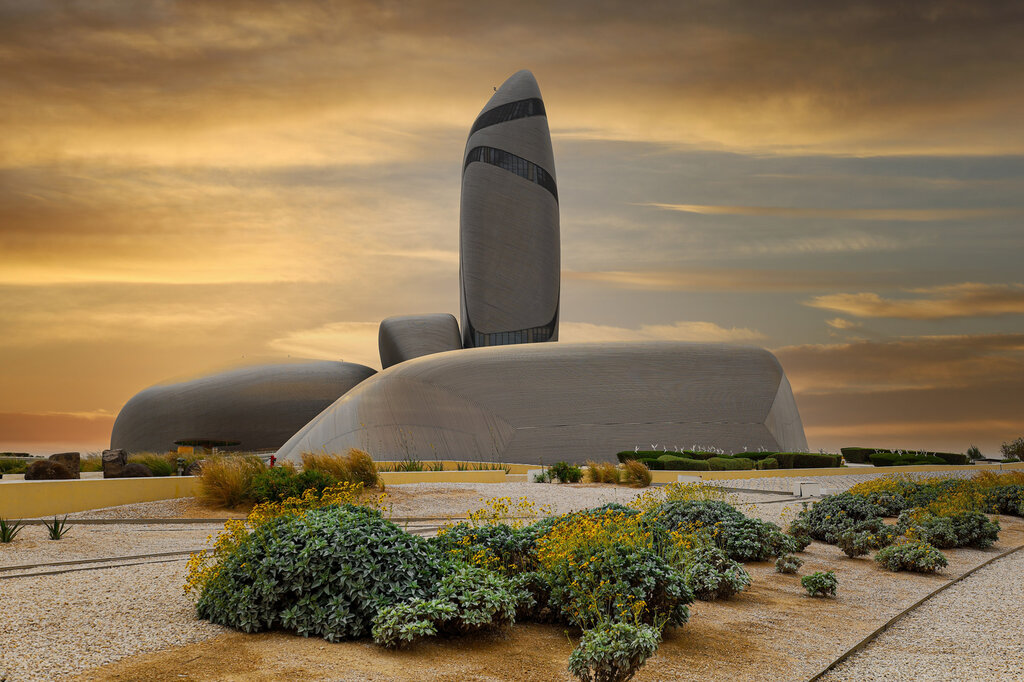
Main image: Dammam, Saudi Arabia. Credit: Ayman Zaid/Shutterstock.com