


Women in Leadership
Women driving Türkiye's transformation
ACCA’s roundtables give insight into challenges facing female leaders and the solutions to transform business.


Capitalising on increased female representation at Board and senior leadership level in Türkiye, leading global accountancy body ACCA (the Association of Chartered Certified Accountants), and global professional services firm KPMG, invited 94 women leaders and professionals to share experiences, challenges and opportunities related to leadership and navigating change in the region’s evolving business landscape.
To ensure women in Türkiye continue to drive transformation, organisations need to support strong professional networks, develop policies to support women and empower employees to enable progression.
The findings from the roundtables give insight into:
- the challenges that women face in leadership roles
- the role of mentorship and sponsorship in career development
- how leaders are looking to grow and develop.
Jessica Bingham, head of Regional Policy Development EEMA & UK, ACCA, said: "The findings will improve the understanding of current barriers impacting women’s career progression, identify practical actions organisations can take to foster more inclusive leadership environments, and encourage meaningful dialogue around sustainable change and equal opportunities at work."
Three key recommendations for Türkiye business came from the roundtable:
Undertake sponsored networking initiatives: Strong professional networks play a critical role in helping women build confidence, access new perspectives and develop relationships that can support career advancement. By connecting women with internal and external communities, organisations can help create sustainable support systems that foster mentorship, sponsorship, and leadership readiness.
Review policies and communications: Using sectoral and geographical benchmarking organisations should track appointments, critical projects, pay, promotions, and attrition alongside representation to ensure there is an equitable decision-making culture.
Increase visibility – strategically amplify role models and success stories: Many women mentioned barriers related to the perception of gender, and lack of confidence to speak up and put themselves forward. By amplifying the work each organisation does to improve its leadership culture women are more likely to feel empowered and grow within organisations.
Seval Sir, country manager, ACCA Türkiye commented, “Women need equal access to progression, decision-making power, sponsorship, and senior roles. Organisations need to create environments in which women can reach senior roles and succeed in carrying them out. Such environments not only promote fairness but also contribute to better business outcomes – diverse leadership teams are consistently linked to increased innovation and organisational resilience”.
Challenges remain. Türkiye ranks 135th out of 148 economies in the Gender Gap Index (WEF, 2025). Progress in Board representation remains gradual – women held 19.4% of Board positions at Borsa-Istanbul (BIST)-listed companies in 2025, up from 18.7% in 2024. But 77% of roundtable participants stated that their organisation actively fosters inclusive leadership environments. The challenge is embedding equality into organisational processes, decision-making rights, and accountability – moving from ambition to implementation. Future-ready leadership means more than giving women a seat at the table – it is empowering them to make decisions, lead transformation, and develop the next generation.
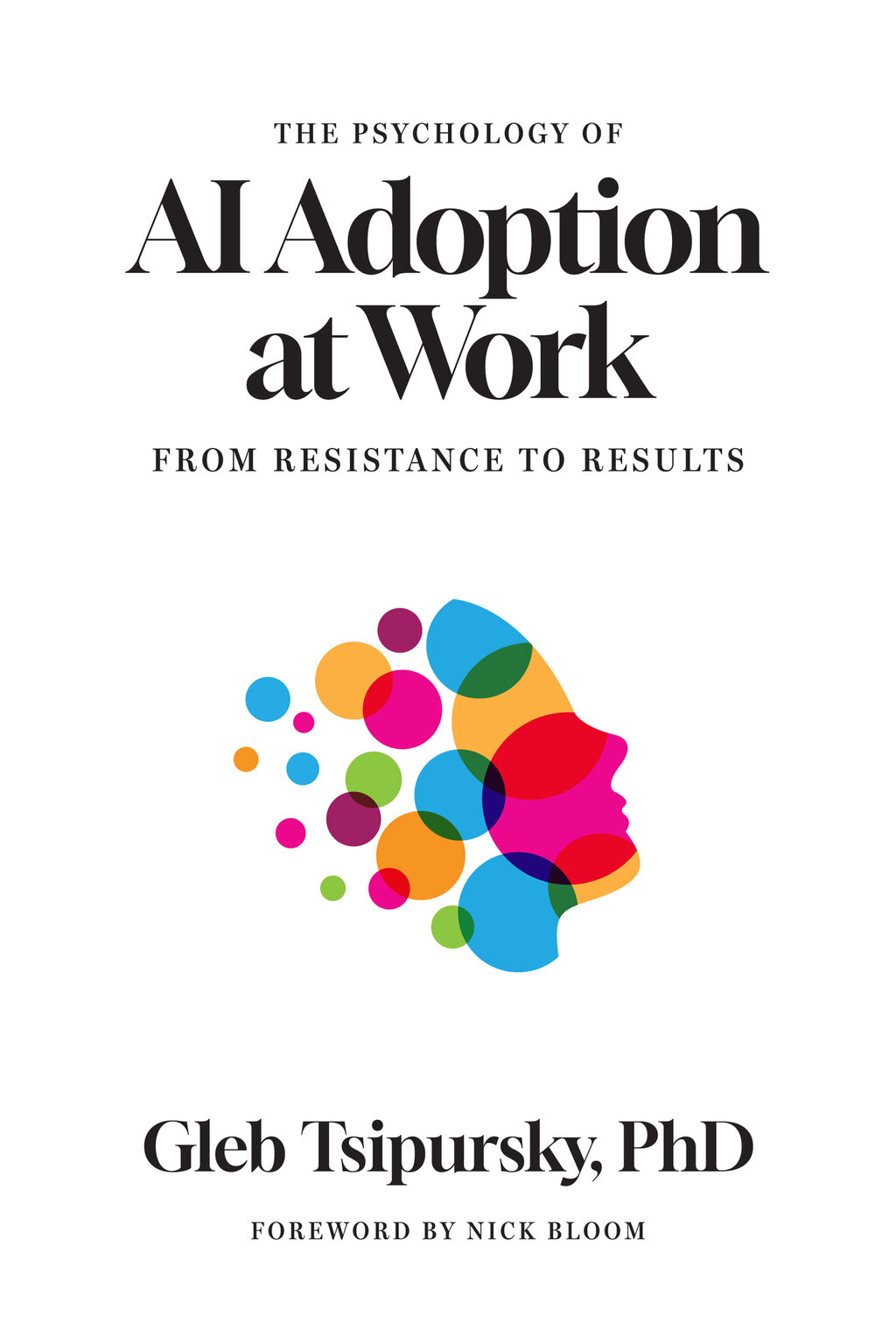
The Psychology of AI Adoption at Work
The accounting profession makes the stakes unusually clear. An ACCA survey of finance and accounting professionals found that 82% felt confident learning AI skills, yet 51% worried about its effect on their jobs. A separate ICAEW study of 35 mid-tier UK firms found 68% expected reduced demand for some early-career roles, although 83% did not expect fewer roles overall. The anxiety has a rational basis. Career paths and valued tasks really are changing.
What interested me as a behavioral scientist was why the same AI demonstration could energise one professional, threaten another and leave a third eager to experiment privately. Conventional software implementations often require people to learn rigid systems. Generative AI lets employees converse with a tool and customise its use. That flexibility raises the importance of motivation, professional identity and social expectations.
I now distil the psychological barriers into three recurring patterns. AI Alarmists fear losing their livelihoods. Telling them how many working hours AI eliminates can worsen the problem. Leaders should explain credibly what will happen to the capacity recovered, whether that means serving more clients, expanding advisory work or improving turnaround times. Promises about job security should extend only as far as management can honour them.
Pragmatic Resistors fear losing the work that gives them professional pride. Consider an experienced auditor whose judgment was built through years of reviewing evidence. Demonstrating how convincingly AI can imitate that judgment may provoke resistance. A better starting point is the tedious preparation that obstructs professional work: collating approved internal material, drafting routine meeting notes or organising research for human review. The Financial Reporting Council's 2026 guidance on generative AI in audits reinforces that human auditors remain accountable for audit quality.
Reluctant Adopters present almost the opposite problem. They already find AI useful but conceal it because they fear appearing lazy, dishonest or less capable. Their employers consequently miss successful experiments, while employees may retreat to unsanctioned tools. Managers can change that social equation by openly demonstrating their own responsible AI use, welcoming discussion of mistakes and recognizing colleagues who share validated workflows.
These distinctions explain why generic AI training often disappoints. A skills course cannot by itself resolve fears of redundancy, diminished professional standing or ridicule. Training works better when managers begin with the tasks employees dislike, clarify acceptable uses and give teams permission to discuss what succeeds and fails. ICAEW's GenAI Accelerator program shows how professional development can be organised around practical use cases and responsible adoption.
Responsible use also requires clear governance. In an October 2026 ACCA ethics study, 61% of respondents identified AI use among their leading ethical challenges, up from 32% in 2024. Yet 72% said AI enhanced the quality and efficiency of their work. Firms should specify which information can enter approved systems, who verifies outputs, when escalation is required and which decisions remain human. Clear accountability makes experimentation safer.
Start with a bounded accounting workflow. Ask a team to use an approved AI system to prepare a client-meeting agenda from information already cleared for that system. Have an experienced accountant check the result against the underlying records and professional standards. Record preparation time, corrections and whether the resulting client conversation improved. Share lessons before expanding into riskier work.
The book follows that reasoning into action. It explains how to listen to employee concerns, create psychological safety, recruit peer champions, design training people will actually use and measure improvements in time, accuracy and engagement. An ACCA and CA ANZ study of 1,600 finance professionals similarly identifies skills, data quality and governance as practical requirements for AI-enabled finance.
My central argument is that adopting AI changes the relationship between people and their work. Accounting leaders can make that change productive when they take employees' fears seriously, preserve professional judgment and reward people for learning openly. That is the thinking behind my approach to workplace AI adoption: technology creates possibilities, while leadership determines which possibilities become routine, trusted practice.
Irena Teneva, associate technical director – Research & Development, CIMA®
An Audit Doesn't Mean You've Done Anything Wrong
A SARS audit should not automatically be viewed as an indication of non-compliance. However, once an audit begins, businesses are expected to respond quickly with detailed financial records, supporting documentation and technical explanations. Depending on the complexity of the review, this process can take months to resolve and often requires specialist tax expertise.
Many businesses believe that having a good accountant is enough. While your accountant plays a vital role in your business, complex SARS audits and disputes may require additional tax specialists or legal expertise. Those professional costs can escalate quickly, regardless of the final outcome.
Main image left: Jessica Bingham, head of regional policy development EEMA & UK, ACCA, right: Seval Sir, country manager, ACCA Türkiye. Main video credit: Seamless Loop/Shutterstock.com